
In Chapter 5, I briefly explained the reason why pre-2000 manga was formatted to be read from left-to-right (Western Style).
Post-2000, most manga is translated and released in its original Japanese formatting (right-to-left).
So what happened during that transitional period? Although not well known, this question cannot be answered without mentioning Yoshiyuki Sadamoto’s manga NEON GENESIS EVANGELION.
When I went to Japan, around 1997, to request the rights to translate and publish this manga, I was told by the publisher that Mr. Sadamoto himself requested that it be published in the original right-to-left format, rather than the Western left-to-right format. To my knowledge, at the time, right-to-left manga in English simply did not exist. This was at a time when the Evangelion anime was already airing in Japan and seeing great popularity. I am going to go on a bit of a tangent, but I personally think “Eva” was a pioneering work that took a market that had been negatively connoted as and called otaku in Japan, and made it into a major player, lifting otaku into something seen as “cool.”
As mentioned above, Evangelion was already a wildly popular title in Japan, and I strongly wanted to publish an English version of it. However, right-to-left manga had never been released in English before, and personally, I was of the belief that in order to bring manga into the mainstream, we had to make it easier for English readers to read…
I came up with the idea and proposed to the Japanese publishers to publish both formats, and have the readers decide which they prefer. The publishers were surprised when they heard my proposal but it was passed on to Mr. Sadamoto, and eventually, I received the OK to move forward with my idea.
Thus, NEON GENESIS EVANGELION was published in both formats. The results? I believe out of all copies sold, approximately 70% were left-to-right, 30% were right-to-left. What do these results tell us?… I think this is something that should be discussed with you all, so I will refrain from commenting.
After that, North American publishers excluding VIZ began releasing only right-to-left manga and furthermore, reduced the price of the previously expensive manga by more than 30%. Where the real reason lies is a matter of debate, but even leaving that reason aside, there is no doubt that it is a wise decision.
As if following in their footsteps, VIZ also began publishing right-to-left manga, but it was a single comment (request) from a famous artist that became the deciding factor.
“We draw manga to be read from right to left. If that gets reversed, the perspective becomes distorted, which can make our work look poorly done, so please consider translating and publishing manga in its original format.”
The person who made this request was a highly skilled artist and storyteller. To a layperson like me, everything looked perfectly fine even when the manga was reversed, so hearing these words from a first-rate artist struck a chord with us and made us touch base and rethink why we were trying to bring manga to the world, and for whom. Hence, the transfer of manga to be published in the Japanese right-to-left format was set in motion.
Happily ever after…?
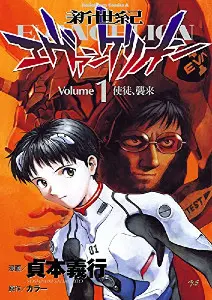
The cover of the NEON GENESIS EVANGELION Vol.1 that had a simultaneous right-to-left format and left-to-right format release.

Hyoe Narita started as an editor at Shogakukan Inc. for women’s magazines and manga for eight years from 1988. In 1996, Narita moved on to work for VIZ Media, LLC (San Francisco, California, USA) and eventually served as the Executive Vice President. There, he founded and became the first editor-in-chief of North American SHONEN JUMP. From 2012 to 2017, Narita was the President of Viz Media Europe with offices in Paris, Berlin, and Lausanne. Simultaneously, he served as the Vice President of the Chambre de Commerce et d’Industrie Japonaise en France between 2014-2017. Narita is now President of Humony International, Inc., Chairman of FANTASISTA, INC., and Professor at the Anime and Manga Department at Kaishi Professional University.